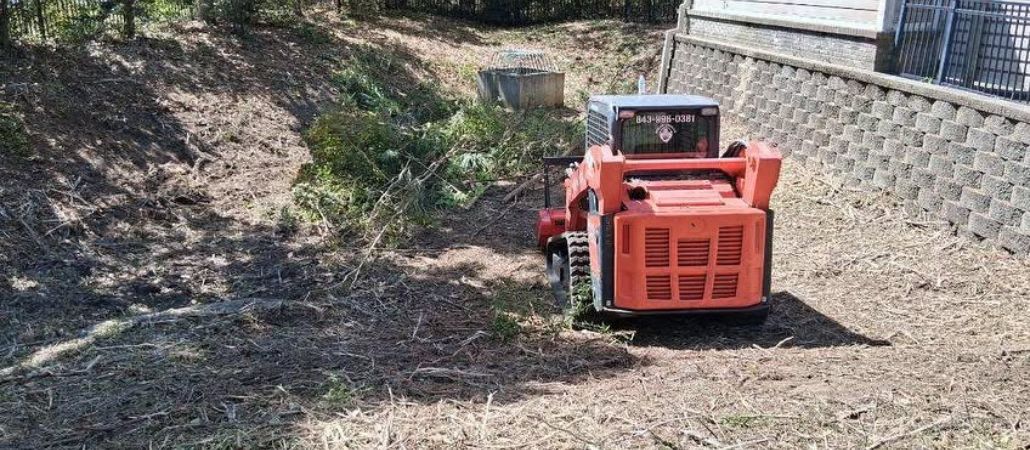
Overgrown land doesn’t fix itself. Invasive vines swallow fence lines, brush overtakes and consumes usable ground, saplings push back into fields you used to mow, and invasive species of vegetation take over and grow expeditiously. Being proactive and clearing vegetation safely takes the right machine, equipment, and an operator who knows Lowcountry ground and topography. Not to mention a company that will tell you the truth about the scope of work and that will actually show up to do the work effectively and efficiently. Newer companies in the local area claim they are “land management businesses,” but many of them only work on a half-acre here or there, and others do not even know how to plant trees, manage vegetation, and undercut prices, all while providing a customer with a substandard finish just to get business. At Green Gorilla Land Management, we manage the vegetation for well over 1,000+ acres annually and have been awarded elite accolades for our performance in the community and the state of South Carolina.
Charleston-area properties raise the stakes: wet soils, mixed hardwood and vine growth, buried debris from old structures, and edges near ditches, drainage, and wetlands that are easy to damage if the operator isn’t paying attention.
Use the questions below on your first call and during the site walk.
Are You Licensed, Insured, and Experienced with This Kind of Work?
This one is non-negotiable. Ask for a current certificate of liability insurance and confirm the company carries workers’ compensation coverage for anyone who will be on your property. A legitimate contractor will send that paperwork without hesitation. If the answer is vague, stop there — if an uninsured crew damages a neighbor’s fence or a septic field, that can become your problem.
Experience matters just as much as paperwork. Brush clearing in Charleston is not the same as clearing dry, open ground elsewhere. Soft soil, dense undergrowth, hardwood saplings, thick vines, hidden stumps, and boundaries near drainage all demand judgment as much as horsepower.
Good follow-up questions:
- How long have you been doing this work in the Lowcountry specifically?
- Can you show me before-and-after photos of a property similar to mine?
- Who will actually run the machine on my job?
Green Gorilla Land Management is a licensed and insured veteran-owned small business that launched in 2019 and works on residential, commercial, and government properties throughout greater Charleston.
What Equipment Will You Use on My Property?
What a company brings to the job tells you what it can actually do. Ask directly:
- Is the machine tracked or wheeled?
- Can it work on soft, rutted, or uneven ground without tearing up the site?
- What attachment will be used — a mulching head, a brush cutter, or a mower deck?
- Will the material stay on-site as mulch, or does something need to be hauled off?
- How will you protect the trees, fences, and structures I want left alone?
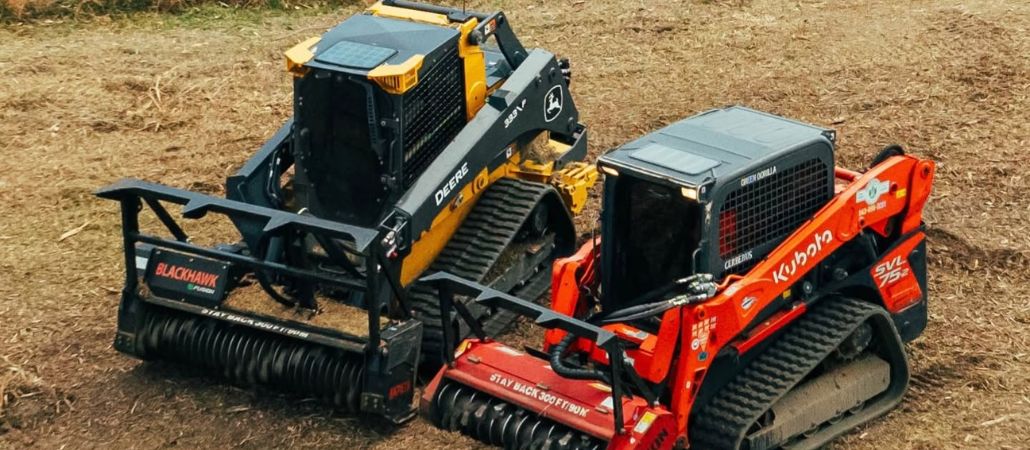
Tracked machines spread weight and can reach areas that wheeled tractors can’t get into because of terrain, mud, or ruts.
Equipment quality also explains price. Heavy tracked mulching gear is expensive to buy, transport, fuel, and maintain, and it takes a trained operator to run it well. If one bid is dramatically below the rest, ask what’s different about the machine, the crew, or the scope.
Will You Walk the Property Before Quoting?
Any contractor worth hiring will walk the site before giving a firm number. Satellite images and tax maps don’t show buried wire, old fencing, changing elevation, soft spots, root systems, or how thick the growth really is at ground level.
The walk is also your chance to explain the goal. Are you prepping a build site, reclaiming a backyard, opening access to the rear of a parcel, restoring fence lines, or getting control of acreage that’s been neglected for years? The plan changes with the answer.
A number quoted sight-unseen is a guess. Guesses turn into change orders, or into a crew that quits halfway when the site turns out harder than expected. Either way, the property owner pays for the poor planning.
How Do You Handle Stumps, Vines, and Cleanup?
This gets to what you’re actually buying. Knocking vegetation down is easy. Leaving a property controlled, accessible, and usable is paramount.
Be specific about the finish, and be skeptical of anyone who promises that mulching alone takes care of everything. A mulching head processes standing brush, vines, and small trees into a mulch layer on the ground, which helps suppress regrowth and hold soil in place during heavy Lowcountry rain. It is not the same thing as land clearing, stump removal, or grading.
If you need stumps gone or ground you can build on, say so up front — land clearing with stump grinding is a different scope and should be priced as such.
Questions to ask:
- Will there be leftover debris piles, or does material stay on-site as mulch?
- How will stumps be left — mulched low, ground out, or untouched?
- Will the ground be drivable and walkable when you leave?
- Which trees and boundaries are you protecting?
- If something gets damaged, what’s your process for making it right?
That last question separates established operators from crews chasing quick money. Anyone can say “land management.” The test is what happens when conditions get difficult or a mistake needs owning.
Do You Only Clear Once or Manage Land Over Time?
Plenty of Charleston-area owners need more than one visit. Brush comes back. Fence lines grow in. Fields need cutting, storms drop limbs, and access roads close up again.
Ask whether the company handles maintenance after the initial clearing — bush hogging for rough acreage, large-scale mowing for fields and commercial grounds, and storm cleanup when weather hits. One contractor who can do the first clearing and the upkeep protects the work you already paid for and saves you from managing three vendors. We can build you a vegetation clearing plan that pairs well with a maintenance plan so that the vegetation does not just take over again.
What Areas Do You Actually Serve?
Not every company advertising “Charleston” covers the whole region. Confirm coverage before you spend time on scheduling. Green Gorilla Land Management is based in Hollywood, SC, and serves the greater Charleston and surrounding areas, including Hollywood, Ravenel, Meggett, Edisto Island, Summerville, Cottageville, Walterboro, Mt. Pleasant, Lady’s Island, Beaufort, and Hilton Head.
What’s Included in the Quote — and What Isn’t?
Get the scope in writing before work starts. Ask:
- Is pricing based on acreage, hourly work, or a flat project rate?
- Are larger trees included or priced separately?
- Is stump grinding or treatment included?
- Is grading or hauling included?
- What happens to the price if hidden conditions change the scope?
- What exactly will the property look like at completion?
This is where cheap bids fall apart. A low number often looks good because it quietly leaves out the hard parts. You’re not just comparing prices — you’re comparing equipment, judgment, thoroughness, and accountability.
Frequently Asked Questions
Brush clearing is the broad goal — removing vines, shrubs, saplings, and thick vegetation. Forestry mulching is one method of getting there, using a mulching head to grind vegetation into mulch on-site instead of hauling or burning it.
Not automatically. Mulching processes surface vegetation and small woody material, but root systems stay in the ground unless stump grinding or excavation is part of the scope. If you’re building, ask for that distinction in writing.
Cost depends on acreage, vegetation density, tree size, terrain and soil conditions, access for equipment, how much needs to be protected, and the finish you want. That’s why the estimate comes after a property walk.
It depends on the same factors that drive cost — size, density, terrain, and access. A contractor can give you a realistic timeline after seeing the site.
In most cases, yes. A mulch layer helps suppress regrowth and reduce erosion, which matters in Charleston where heavy rain moves exposed soil fast. If you want the ground bare for a specific use, say so during the walk.
Permitting requirements vary by municipality, county, and whether the work touches regulated areas like wetlands or protected trees. Ask any contractor how they’ve handled it on similar jobs, and confirm with your local jurisdiction before work begins.
Ready to Clear Your Charleston Property?
If you’re hiring for brush clearing in Charleston, ask hard questions first. A capable contractor can explain the equipment, the process, the cleanup, the scope, and the finished result — and will stand behind the work.
Call (843) 996-0381 or request a free estimate. We’ll walk your property, talk through what you want the land to do, and give you a clear scope before anyone starts a machine.