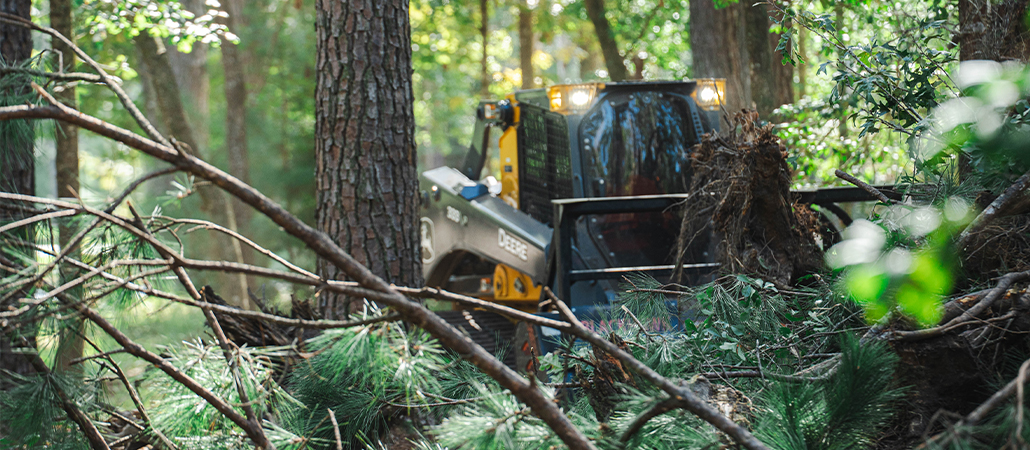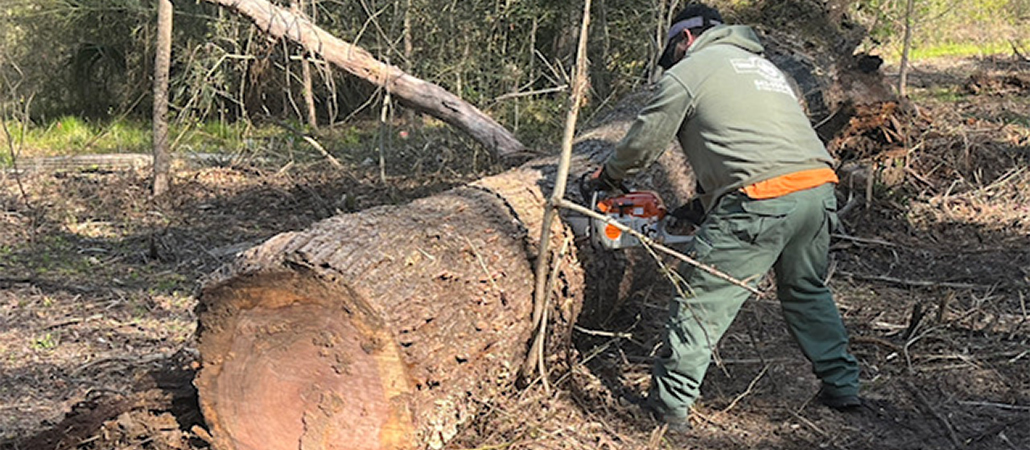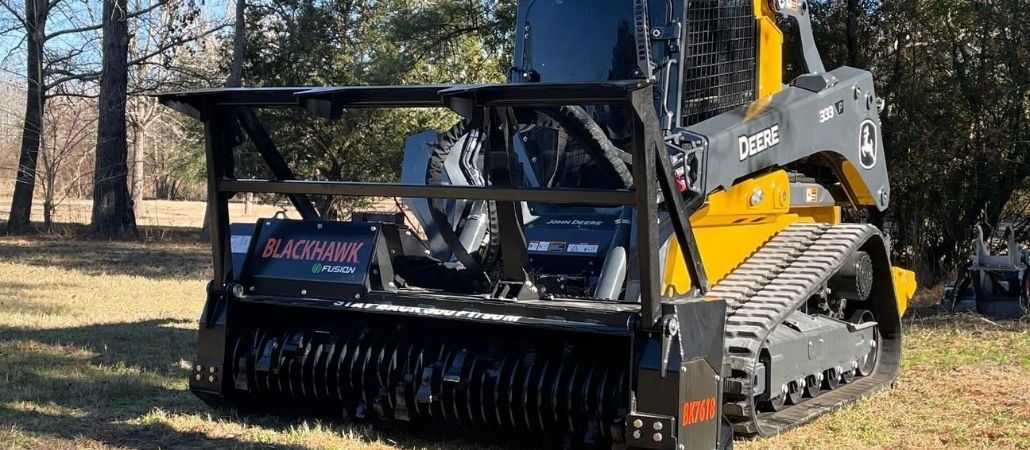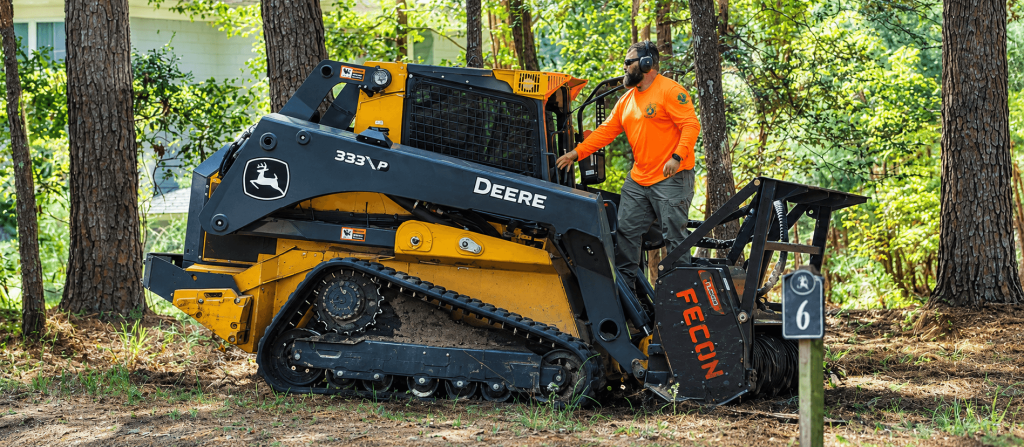
Lowcountry land does not stay put. Warm, wet growing seasons and heavy tree canopies mean a lot that looked manageable in March can be impassable by August.
Most property owners don’t call because of one dramatic problem — they call because a series of smaller ones stacked up until the land stopped being usable. Below are the signs worth acting on and what professional clearing actually changes.
1. You Can No Longer Walk or See Your Own Property
The simplest test is to walk your boundary. If briars, dense shrubs, invasive vines, and saplings stop you within a few steps, the property has crossed from “overgrown” into “inaccessible.”
That matters for practical reasons:
- You can’t verify your property lines. Corner markers and fence lines disappear under growth, and boundary disputes are far easier to prevent than to settle.
- You can’t inspect what you own. Damaged fencing, erosion, dumped debris, and dead or leaning trees all hide in thick brush.
- You can’t show it. If you’re listing land, buyers and agents won’t fight through underbrush to picture the potential.
Realtors and land sellers often request clearing for exactly that reason. A property is easier to evaluate when buyers can see the acreage, terrain, and access rather than a wall of brush.
2. Brush Is Crowding Structures, Access Points, and Sightlines
Vegetation growing directly against buildings, sheds, fences, driveways, and roadways is more than a cosmetic issue. Overgrowth along a driveway or road frontage cuts sightlines for anyone pulling in or out. Brush pressed against structures holds moisture, provides cover for pests and snakes, and creates continuous fuel right where you least want it.
Fuel load is a real consideration on rural and wooded Lowcountry parcels. Clearing dense brush and creating fire breaks reduces the connected fuel that lets a fire move across a property — one of the specific outcomes our brush clearing services are built to deliver.
If emergency vehicles, a well truck, or a delivery driver couldn’t get down your access road today, that’s a sign worth treating as urgent.
3. Invasive Species Are Taking Over
Invasive plants don’t share space — they replace it. Once they establish, they outcompete native vegetation, choke out desirable trees, and come back harder every year if you only cut the tops.
Signs of an invasive problem:
- Vines climbing and killing mature trees
- A single species dominating what used to be varied growth
- Regrowth returning thicker and faster after every trim
- Native plants and open understory disappearing year over year
Professional clearing addresses this with invasive species removal and selective clearing — removing the unwanted growth while preserving the valuable trees and plants you want to keep. That’s a deliberate, controlled process, not a scrape-everything approach. Preserving ecological balance while making land usable is central to how we work, and it’s the same philosophy behind our forestry mulching work.
4. Your Maintenance Equipment Has Been Outgrown
There’s a clear line where homeowner equipment stops being the right tool. Push mowers and trimmers handle grass. Once you’re facing woody stems, saplings, briar thickets, and multi-year growth, you’re not mowing — you’re clearing, and the equipment requirement changes entirely.
Signs you’ve crossed that line:
- Your mower stalls, bogs, or throws debris in areas it used to handle
- You’re cutting the same acreage repeatedly with no lasting progress
- Stems are thick enough to require loppers, a chainsaw, or a machete
- Whole sections of the property have simply been abandoned to growth
Trying to force it is where people get hurt. Hidden stumps, buried debris, insects, snakes, and unstable ground are common concerns in dense Lowcountry brush. Professional operators bring equipment and a process designed for conditions that hand tools cannot manage efficiently.
5. Growth Is Blocking Your Plans for the Land
Sometimes the sign isn’t a problem — it’s a project. Brush clearing is the first practical step for a long list of goals:
- Preparing a lot for construction
- Getting a property ready to list or sell
- Opening pasture, fields, or food plots back up
- Creating trails and access paths through wooded land
- Reclaiming a backyard that’s been lost to the tree line
Clearing gives you a clean, workable starting point. It’s worth being straight about scope: brush clearing removes the vegetation standing in your way — it isn’t grading, large-tree removal, or landscape installation. Those are separate scopes of work. Some of them we handle under our land clearing services, such as lot clearing, underbrush thinning, and stump grinding. What clearing does is get the land to a point where the next step is even possible — and lets you see exactly what you’re working with before you commit to a bigger plan.
6. Regrowth Keeps Winning
If you’ve cleared before and it’s back, the issue is usually that the work stopped at cutting. Vegetation management — maintaining cleared areas to prevent regrowth — is what makes clearing hold. Otherwise you’re paying to repeat the same job every couple of years.
That’s especially true on larger acreage, where an ongoing maintenance approach like bush hogging can help keep a cleared property from sliding backward.
What Professional Brush Clearing Actually Involves
When we take on a brush clearing project in Greater Charleston, the work typically includes some mix of:
- Brush clearing — removing dense brush, shrubs, and small trees
- Vegetation management — maintaining cleared areas to prevent regrowth
- Fire break creation — reducing fuel and mitigating wildfire risk
- Invasive species removal — restoring ecological balance
- Lot clearing — preparing sites for construction or landscaping
- Selective clearing — preserving valuable trees while removing unwanted growth
Every property is different. Terrain, density, wet ground, and what you want the land to do afterward all shape the approach. A site review helps match the method and equipment to the actual conditions.
Frequently Asked Questions
Brush clearing is about removing unwanted growth so land becomes usable and accessible. Forestry mulching grinds trees, brush, and debris into nutrient-rich mulch that’s left on site to enrich the soil and control erosion. Plenty of projects use both. We’ll tell you which fits your property when we look at it.
Yes. Green Gorilla offers selective clearing to remove unwanted growth while preserving valuable trees and plants. Identify what you want to keep during the site review so it can be included in the scope.
Growth compounds. Fuel loads build against structures, invasives kill mature trees, access roads narrow, and problems you can’t see get worse unwatched. The job also gets bigger, because thicker, more established growth takes more machine time.
Yes. We serve Greater Charleston and coastal South Carolina, including Hollywood, Ravenel, Meggett, Edisto Island, Summerville, Cottageville, Lady’s Island, Beaufort, and Hilton Head.
Request a free estimate. Brush clearing pricing depends on acreage, density, terrain, and access — no honest number exists before someone assesses the site.
Reclaim Your Overgrown Charleston Property
If your land has crossed the line from overgrown to unusable, stop fighting it with the wrong tools. Green Gorilla Land Management is a veteran-owned, 5-star-rated land management company serving Greater Charleston and coastal South Carolina, with the equipment and experience to clear dense brush safely and responsibly.
Contact us for a free estimate or call (843) 996-0381. Tell us what you want the land to do — we’ll tell you what it takes to get there.